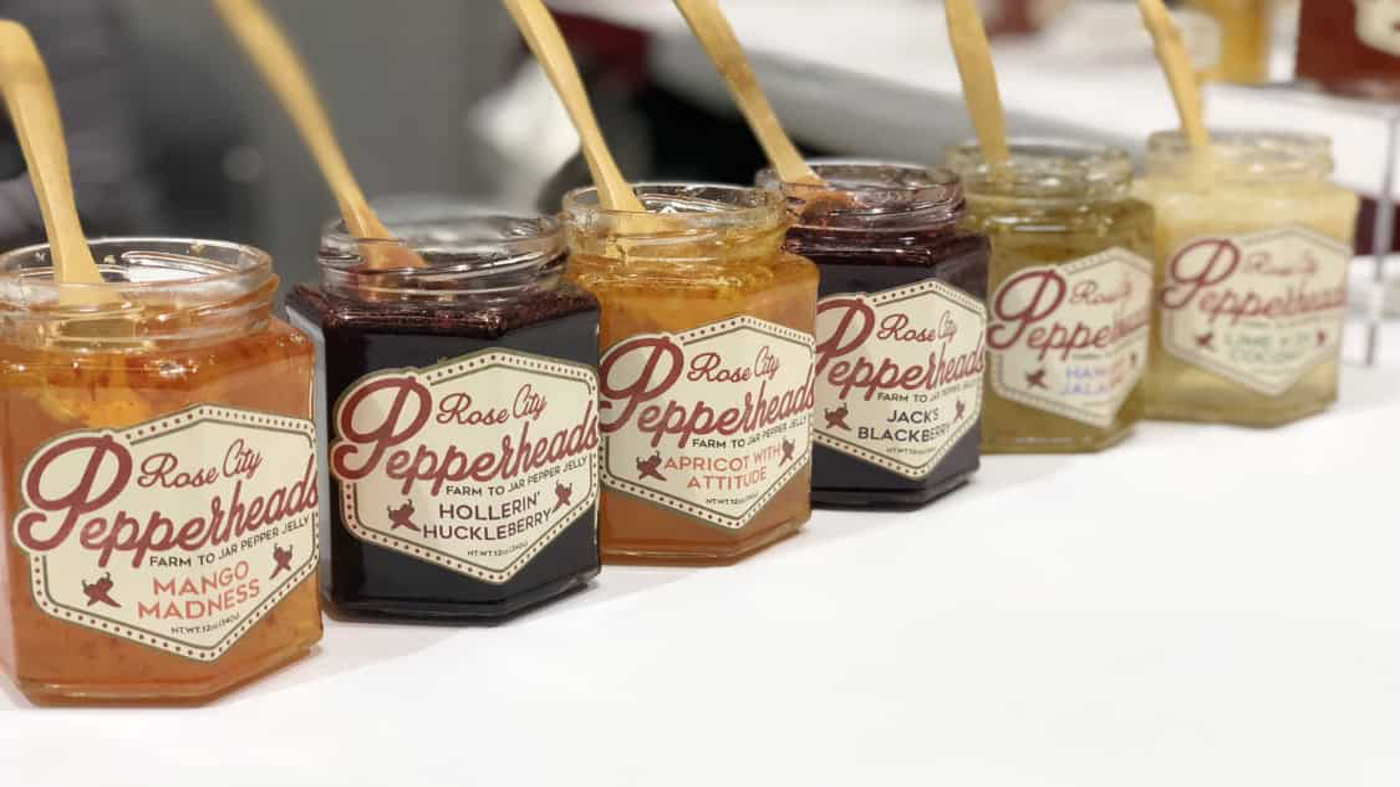
This past year, IronGlove Studio® supported our retail client, Rose City Pepperheads, on a really strong, sales-focused Black Friday/Cyber Monday weekend. Rose City Pepperheads is a Portland specialty food brand producing hot pepper jellies and sauces. Woman-owned, locally rooted, and built on farmer's market relationships, they've cultivated a loyal following across the Pacific Northwest over nearly three decades.
Black Friday/Cyber Monday 2025 felt less like a "sale" and more like a redemption arc for the brand's online strategy. We asked our client to try something new in winter 2025 for her customers, and she did, with the results exceeding her expectations.
Our team manages both Rose City Pepperheads' existing Weebly and the upcoming WooCommerce platform, along with their paid social advertising. When checkout experience, analytics tracking, and ad strategy align under one roof, there's no finger-pointing between vendors when something breaks. In this case, we were able to identify operational areas to strengthen so that future campaigns can be even more effective. With Matomo behavioral tracking, we knew exactly what shoppers were doing (and why).
Running a commercial kitchen during peak production season leaves little bandwidth for any e-commerce strategy. Rose City Pepperheads built their business through wholesale relationships and farmers markets initially, with direct-to-consumer as a secondary channel that rarely got dedicated attention. This is simply the life of a busy business owner with a small staff. When the 2024 campaign launched late, it wasn't a strategic choice, but the operational reality of a small team prioritizing production commitments first and foremost. With our team now handling DTC strategy, 2025 marked the first properly planned Black Friday campaign.
After a decreased 2024 season, our team went into 2025 with a goal to rebuild from the ground up, and it shows: the campaign period alone brought in a 27.7% jump in revenue over the prior year, while staying 6.6% under the planned ad budget. That translated into a 6.50x return on ad spend (ROAS) roughly 30% above the industry average for paid social, and a 119% profit over investment, meaning every $1 spent came back as $2.19.
The most telling pattern in the data is how a focused, short-term campaign can carry an entire month.
From November 1 through December 2, the store brought in over 230 larger multi-jar orders, and more than half of the revenue from orders placed came directly from the Black Friday campaign window. The remaining revenue arrived through organic and non-campaign channels, underscoring how paid and organic worked together, rather than in silos.
With an average order value up 13.3% year over year and a cart abandonment rate of just 9% against an industry norm near 69%, the website and checkout experience quietly did their job. There were no errors. Load times stayed fast, checkout flowed smoothly, and friction was kept to a minimum.
Strategically, three decisions helped turn the tide.
First, our team fixed timing by starting direct promotions on November 22 instead of waiting for November 27 after Black Friday itself, capturing the full Black Friday week and riding the peak shopping days instead of chasing them.
Second, we simplified the offer to a single "$50 and up gets free shipping" threshold, ditching coupon complexity in favor of one clean, easy-to-remember promise, which helped push AOV up that 13.3%.
Third, paid social targeting was tightened and then expanded smartly: five proven markets were included from day one, and Campaign Budget Optimization was used to automatically funnel spend toward what was actually converting.
The post-mortem also reveals a to-do list for 2026 that mirrors broader social advertising trends toward smarter data, cleaner geography, and better channel mix.
Modernizing the Meta Ads account infrastructure sits at the top of our list. The current setup runs through a legacy personal account that limits tracking capabilities and verification options. As we migrate Rose City Pepperheads from Weebly to WooCommerce, we'll implement proper Meta pixel configuration and business verification. Out of respect for our client's confidentiality, we're sharing performance ranges rather than specific figures: these changes typically reduce cost-per-click by 50-65% and improve click-through rates several-fold, translating to meaningful budget savings on future campaigns.
Refining geographic targeting could immediately reclaim budget for higher-performing markets, while scaling Instagram from its current share toward 30-40% of traffic would ride the continued shift of discovery and impulse buying into Reels and Stories. There's also meaningful headroom in tightening retargeting, creative sequencing, and offer structure, turning this year's turnaround into next year's repeatable, data-informed playbook.
Overall, this campaign proved Rose City Pepperheads can profitably scale Meta advertising. The simplified promotional structure works, the geographic targeting is validated, and the two-campaign approach prevents fatigue. The foundation is built. Now it's time to optimize and scale.
With this groundwork in place, we're positioned to launch campaigns earlier in 2026 with tiered promotional offers that build momentum before peak shopping days. We're also collaborating with Rose City Pepperheads on operational cost analysis to develop pricing strategies and discount tiers that protect margins during both everyday sales and holiday peaks.